Hair Serum Sales Grew Nearly 60% in Six Months. Here’s What a Serum Does for Your Hair
Hair serums had an exceptional first half of 2026. American shoppers spent considerably more on specialized hair treatments, particularly products marketed for improved hair appearance and scalp care. The increase was unusually strong even for a beauty category accustomed to frequent product launches.
Hair serum sales increased nearly 60% in the United States during the first six months of 2026, according to Circana’s retail data. But what does hair serum actually do? Conventional formulas coat the hair shaft to reduce friction and improve shine. Scalp serums serve different purposes, depending on their ingredients. Some moisturize the scalp, and certain medicated treatments can stimulate hair growth in people with specific forms of hair loss.
What interests me about the sales increase is the variety of products sold under the same name. A $15 smoothing serum and a $60 scalp treatment may look similar on a store shelf. Their formulations can produce entirely different results, which makes the ingredient list a useful place to begin.
Why Hair Serums Are Outperforming the Beauty Market
Circana reported that U.S. prestige hair care sales increased 11% during the first half of 2026, with unit sales rising 8%. Hair treatments contributed heavily to that performance, led by serums with nearly 60% sales growth.
Using the reported percentages, serum sales grew at approximately 5.5 times the rate of the broader prestige hair category. The figures measure retail revenue growth, so they cannot establish that the products delivered better cosmetic or medical results.
The U.S. hair serum market report valued the category at $305.2 million in 2025 and estimated $317.7 million for 2026. Its forecast reaches $473.6 million by 2033. The report also found that treatment serums represented 64.5% of market revenue in 2025, with midrange products accounting for 35.8%.
Those figures explain why manufacturers increasingly offer specialized formulas. Consumers can now find products marketed for smoothness alongside scalp treatments intended to address concerns about hair density.
What a Serum Actually Changes
The outer surface of a hair strand consists of overlapping cuticle cells that protect its internal structure. Repeated friction and chemical treatments can damage that surface, making hair feel rougher and more difficult to comb.
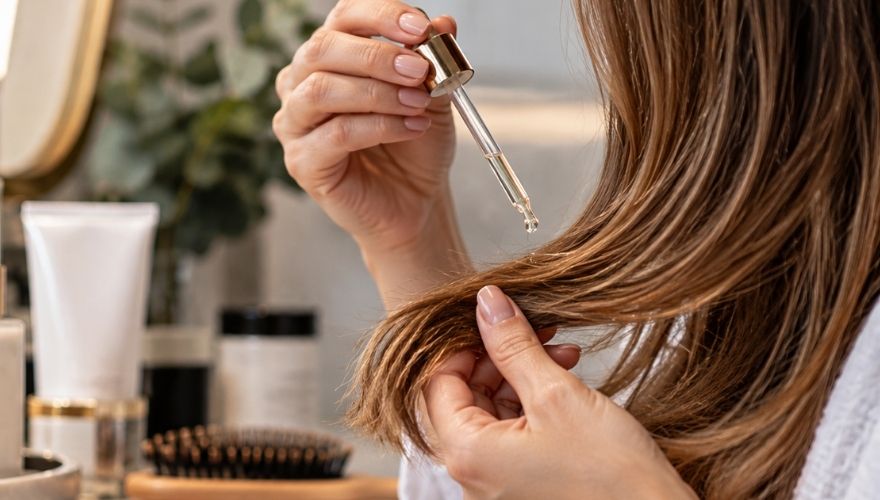
Many conventional serums contain silicones such as dimethicone. A 2025 scientific review describes how silicones form a film around hair fibers, reduce friction and improve shine.
The cosmetic effect can appear immediately after application. Hair often feels smoother because neighboring strands move against each other with less resistance. A more uniform surface can also reflect light more consistently.
What about split ends? A serum can temporarily improve their appearance by coating damaged fibers. The physical split remains, so trimming is still necessary to remove that damage.
I find the distinction particularly useful when evaluating advertisements about hair repair. A product can provide a genuine cosmetic benefit without restoring a damaged strand to its original structure.
Four Products That Share the Same Name
The location where a serum is applied offers a useful clue about its purpose. Some belong on the hair lengths, while others are intended for direct scalp application.
| Serum Category | Typical Ingredient | Main Purpose |
|---|---|---|
| Smoothing serum | Dimethicone | Reduced friction and improved shine |
| Hydrating serum | Humectants and conditioning agents | Temporary softness and improved feel |
| Cosmetic scalp serum | Niacinamide | Scalp care, depending on the formulation |
| Medicated regrowth treatment | Minoxidil | Treatment of certain forms of hair loss |
Table: Comparison based on ingredient function and the American Academy of Dermatology’s treatment guidance. Individual product performance depends on the finished formulation.
The distinction matters because cosmetic hair improvement and biological hair growth involve different processes. The ingredients required to improve the surface of an existing strand are different from those used to treat certain causes of hair loss.
Can Hair Growth Serums Deliver New Growth?
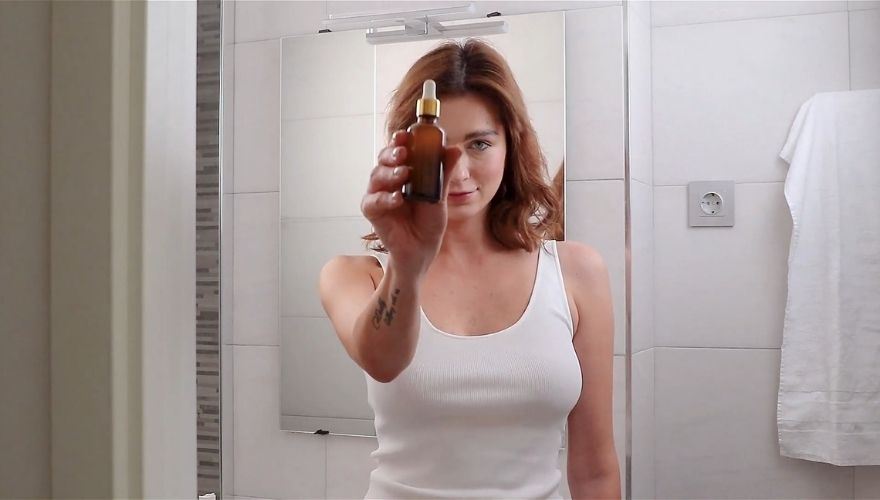
Minoxidil is an established topical medication for certain forms of pattern hair loss. The American Academy of Dermatology reports that treatment can reduce hair loss and stimulate regrowth, although visible results generally require six to twelve months.
Benefits also depend on continued treatment. Some users experience scalp irritation, and individual responses vary.
Products containing caffeine have attracted considerable attention. Laboratory studies have examined caffeine’s effects on hair follicles, but findings obtained under laboratory conditions cannot establish the performance of every consumer serum.
Peptides present a similar challenge. Their effects depend on the specific molecules and their concentration in the finished product. Rosemary oil has also attracted interest, although the clinical evidence remains limited compared with established medications.
Before purchasing a hair-growth serum, I would examine one specific detail: has the finished formula been tested in people with the condition it claims to treat?
Research involving an isolated ingredient provides limited support for a commercial formula with a different concentration.
An Eight-Week Trial Worth Examining
A September 2026 clinical study evaluated experimental scalp formulations in 60 healthy adults over 56 days. Researchers compared five formulations, including a placebo. The experimental products contained selected growth factors or plant-derived extracellular vesicles. Some combined both approaches.
The researchers reported improvements in certain hair and scalp measurements, particularly among participants who received the combined formulation. However, the study lasted only eight weeks and involved a relatively small group.
The manuscript was published as a preprint and had not undergone peer review at the time of publication. Its findings therefore require independent confirmation.
The example shows why the quality of evidence matters when a product promises increased hair density. Short-term measurements provide limited information about sustained results over several months.
Fine Hair Presents a Different Problem
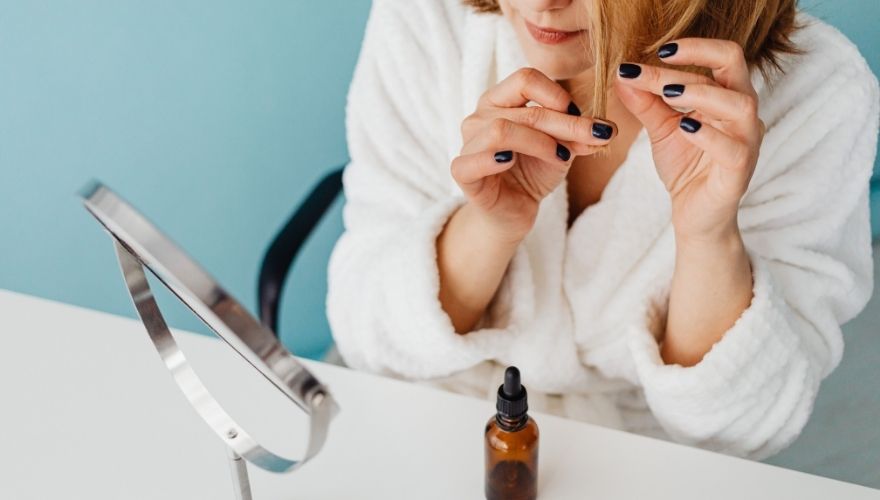
Fine hair can become visibly weighed down after a small amount of serum. Thicker or coarser strands may tolerate greater quantities, especially when the surface is dry.
Product texture also matters. A heavy oil-based formula can leave fine strands looking flat, while a lightweight silicone formulation may distribute more evenly.
A July 15, 2026, discussion on Reddit’s Haircare forum provides a specific example. One participant described using hair essence before blow-drying and applying oil afterward. The combination sometimes left their fine hair looking heavy and greasy.
They later simplified the routine to a silicone-based serum, using two pumps before blow-drying and approximately half a pump on the ends afterward.
That experience is anecdotal, but it illustrates how product quantity affects the finished appearance. It also explains why applying several conditioning products may produce disappointing results on fine hair.
For curly hair, distribution can be more difficult because the strands have a different geometry. Application amounts should therefore reflect the individual’s hair texture and the manufacturer’s instructions.
Hair styling products can also raise safety concerns, as discussed in Formaldehyde Is Still Legal in Hair Straighteners.
The Price Per Ounce Deserves Attention
An expensive bottle does not automatically deliver a better result. Price comparisons become particularly useful when two products serve the same cosmetic purpose.
Consider two hypothetical serums. The first costs $16 for 1.7 fluid ounces. The second costs $48 for 3.4 fluid ounces. The smaller bottle costs approximately $9.41 per fluid ounce. The larger costs $14.12 per fluid ounce, approximately 50% more.
The larger bottle contains twice as much product, yet its unit price remains substantially higher. Those figures are illustrative rather than current retail prices.
A global market analysis valued hair serums at $1.3 billion in 2024 and projected $2.4 billion by 2033. Such forecasts measure anticipated consumer expenditure, not clinical effectiveness.
For cosmetic serums, the amount required per application may have more relevance to value than the size of the bottle alone. A concentrated formula used sparingly could last longer than a cheaper product requiring substantially more per application.
How to Apply Serum Without Weighing Hair Down
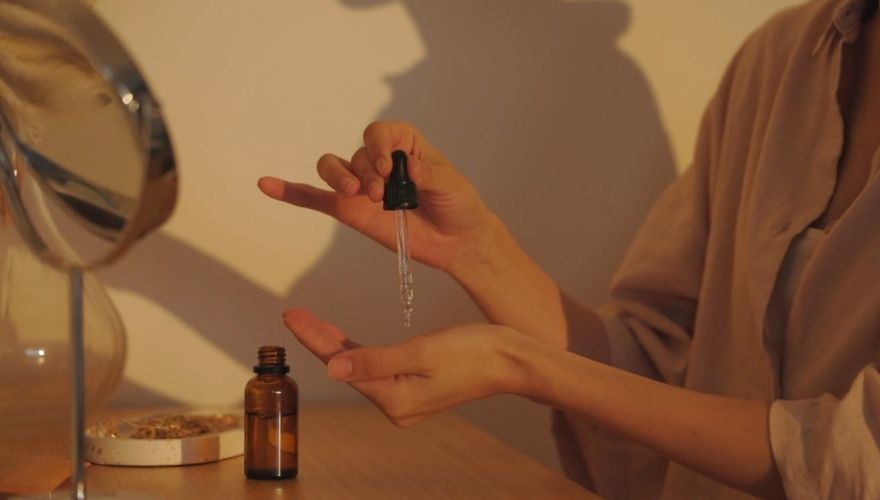
Smoothing serums are generally applied to the mid-lengths and ends, where roughness and frizz are often noticeable. Scalp treatments have separate instructions because their intended application site is the skin.
A few adjustments can improve the result:
- Start with the smallest amount recommended by the manufacturer.
- Distribute smoothing serum through the areas that need conditioning.
- Assess the finish before applying additional product.
- Follow the product’s instructions before using heated styling tools.
Fine hair may benefit from a smaller amount concentrated near the ends. For thicker hair, the suitable quantity depends on the formulation and the strand condition.
Also check the label before relying on a serum for heat protection. That benefit should be supported by claims for the specific finished product.
Some silicone-based formulas can accumulate on the hair over repeated applications. Regular cleansing helps remove residues, with the extent of buildup depending on the ingredients.
For a visual guide to applying serum correctly and avoiding common mistakes, watch How To Use Hair Serum, which offers additional tips for getting the best results.
What the Sales Boom Means for Your Next Purchase
The strongest consumer lesson from the nearly 60% sales increase concerns product selection. The category includes formulas designed for immediate cosmetic results and products intended for longer-term scalp treatment.
If your main concern is frizz, a well-formulated smoothing serum may improve the appearance of your hair after one application. Persistent thinning requires a different assessment.
The American Academy of Dermatology recommends treatments based on the cause of hair loss. A dermatologist can help determine which approach is appropriate when shedding continues or hair density changes noticeably.
Before purchasing another serum, examine the ingredients and the manufacturer’s directions. Compare products designed for the same purpose, then consider the cost per application.
A serum can make existing hair feel smoother and look shinier. Actual regrowth depends on the treatment and the cause of hair loss. The growth in sales reflects substantial consumer demand, while the quality of evidence remains the better basis for choosing a product.