Extra Water Helps Dry Skin Mostly If You Weren’t Drinking Much to Begin With
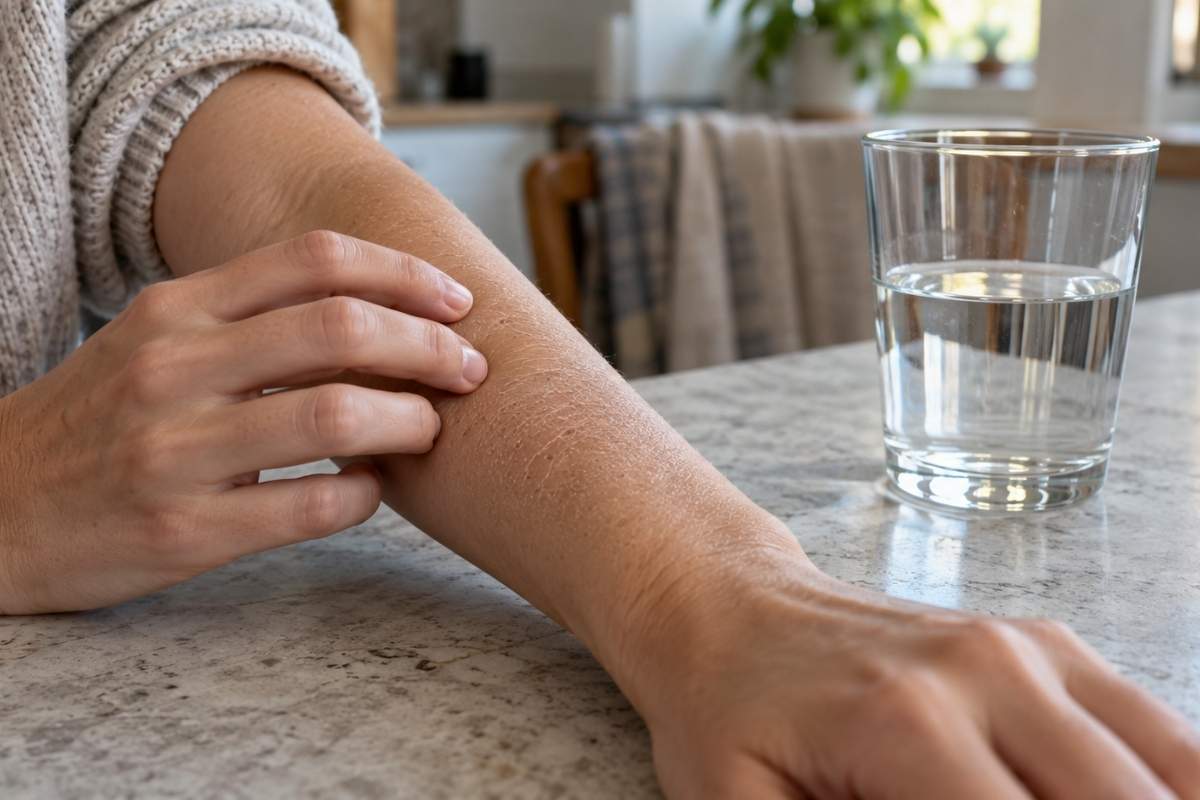
Winter dryness can make your skin feel tight by lunchtime, even if you’ve already finished a large bottle of water. Drinking another glass sounds reasonable. But how much of that water actually improves your skin?
Drinking more water may slightly improve skin hydration, particularly in people whose usual fluid intake is low. A 2018 systematic review found limited evidence of improved skin moisture, with no consistent improvement in the skin’s ability to prevent water loss. The research also provides no convincing evidence that extra water reduces wrinkles.
The distinction matters because dry skin often involves problems with the outer skin barrier. Someone who already drinks enough may get considerably more relief from a moisturizer than from increasing daily water consumption.
What the Six Studies Actually Found
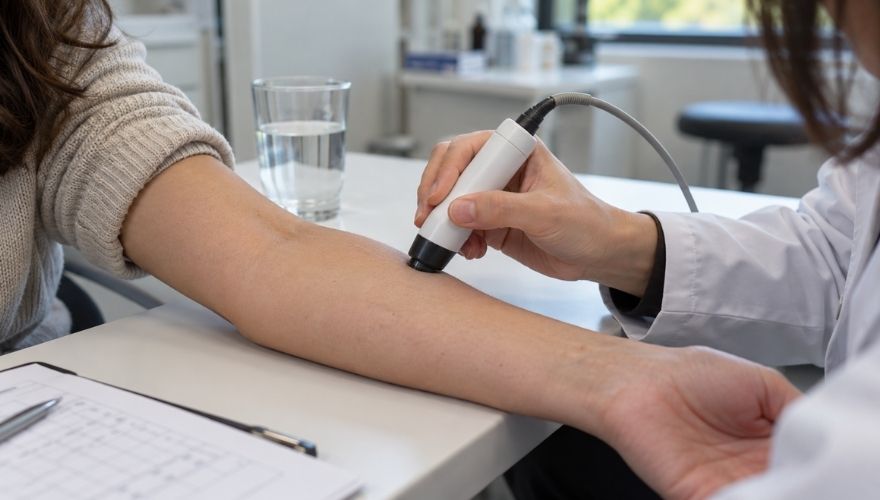
In 2018, Merve Akdeniz and colleagues at Charité–Universitätsmedizin Berlin published a systematic review in Skin Research and Technology.
The researchers screened 216 records, assessed 23 full-text articles, and included six studies. The evidence covered healthy adults and was considered weak overall because of methodological limitations.
The six studies offer a closer look at what happens to your skin when you drink more water, and why the results aren’t quite as impressive as some beauty claims suggest.
- Boelsma et al., 2003 examined diet and skin characteristics in 302 adults. The observational study found associations between certain dietary factors and skin measurements, but could not establish that drinking more water improves hydration.
- Mac-Mary et al., 2006 studied 80 adults with dry skin. Additional mineral water was associated with improved hydration measurements and clinical signs of dryness.
- Williams et al., 2007 compared increased mineral-water and tap-water consumption. Among 86 participants who completed the study, changes in skin measurements differed between groups, illustrating the limitations of a simple water-intake recommendation.
- Palma et al., 2012 examined an additional two liters of water per day in groups with different habitual intakes. Improvements in measured skin hydration were greater among participants who previously consumed less water.
- Palma et al., 2015 investigated water intake and epidermal hydration in healthy women. The findings supported an association between additional water consumption and improved skin hydration measurements.
- Palma and colleagues, 2015 studied 49 healthy women over 30 days. An additional two liters of water daily increased measured skin hydration, with stronger effects among those with lower habitual intake.
An important limitation is that several studies involved related research teams and similar methods. The six publications therefore should not be treated as six completely independent confirmations of a cosmetic benefit.
Better Hydration Measurements Do Not Guarantee Better-Looking Skin
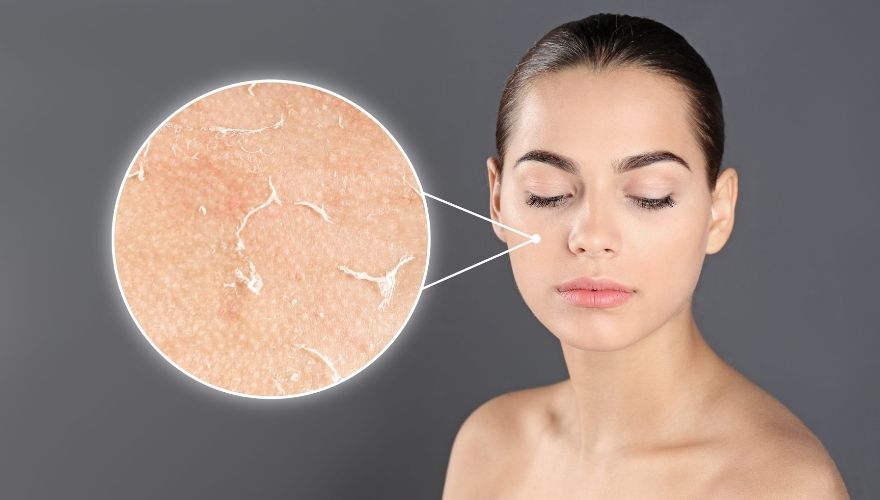
One detail from the 2015 research deserves closer attention. Investigators measured hydration at the skin’s surface and at deeper levels using specialized instruments. They also assessed biomechanical properties such as elasticity.
Those measurements provide useful information about skin physiology. They cannot automatically establish that a participant’s face looked younger or that wrinkles became less noticeable.
The 2018 review also found an unclear relationship between drinking water and transepidermal water loss, known as TEWL. That measurement describes how much water escapes through the skin into the surrounding environment.
A person can have increased moisture within the outer skin layer while still experiencing problems with the skin barrier.
That helps explain a familiar winter situation: someone drinks adequate water throughout the day, yet their cheeks remain rough after hot showers and exposure to dry indoor air.
Increasing fluid intake may offer little additional benefit in that scenario. Protecting the skin’s surface addresses a different mechanism.
A Better Winter Routine Takes Five to Ten Minutes
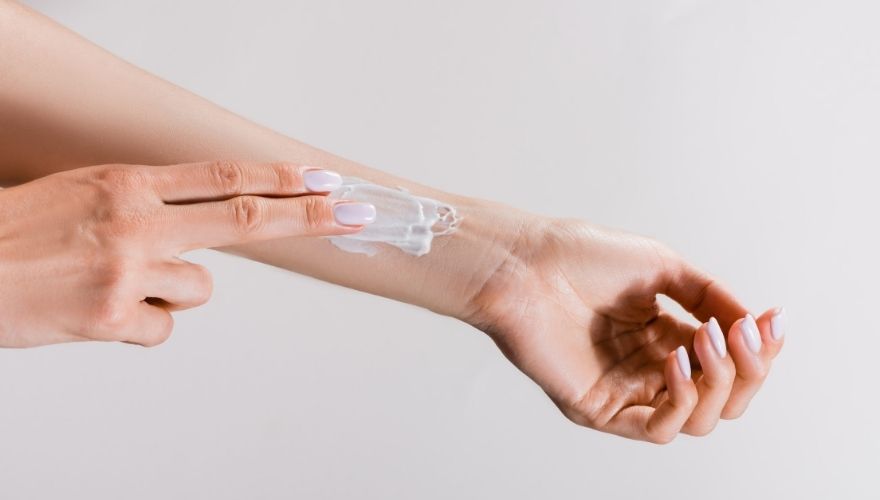
The American Academy of Dermatology recommends limiting showers to five to ten minutes and using warm water.
After bathing, gently pat your skin dry and apply a fragrance-free moisturizer while the skin remains slightly damp. Creams and ointments are generally more effective for very dry skin than lightweight lotions.
Ingredients such as petrolatum help reduce moisture evaporation by forming a protective layer. Ceramides support the lipid structure of the outer skin barrier.
Winter’s dry indoor air can affect your hair, too. If you’ve noticed more flyaways during colder months, Why Is My Hair So Staticky? How to Calm It When the Air Turns Dry explains what causes static and how to manage it.
For someone whose skin becomes tight every winter morning, I would begin with that routine and assess how the skin responds before adding another cosmetic product.
Persistent cracking or irritation deserves evaluation by a dermatologist, particularly when regular moisturizing provides little relief.
For more winter self-care inspiration, you can also explore Garima Verma’s video, Ultimate Winter Self-Care Routine: Skin, Body & Hair Care + Easy DIYs Remedies!, which shares additional ideas for seasonal skincare and at-home care.
My View: Water Is Important, but the Beauty Claims Go Further Than the Evidence
What interests me most about the six studies is how often modest laboratory measurements become much larger promises in skincare marketing. The 2018 review found a possible relationship between additional water intake and hydration. It also acknowledged that the biological mechanism remained uncertain. Its authors called for stronger research, particularly involving older adults.
I would be cautious about any beauty claim suggesting that a fixed number of extra glasses will improve everyone’s complexion. The studies used different methods, and their findings cannot establish a universal daily amount for better-looking skin.
Adequate fluid intake remains important for general health. Anyone with medically prescribed fluid restrictions should follow their clinician’s guidance.
For winter dry skin, my preference is to correct inadequate water intake when necessary and focus on a consistent moisturizing routine. The evidence supports that more measured approach far better than promises of smoother skin from an extra bottle of water.