The FDA First Planned a Formaldehyde Ban for Hair Straighteners in 2023. It Still Hasn’t Proposed One
The FDA originally planned to propose a ban on formaldehyde in certain hair straighteners in October 2023. Three years later, the proposed rule remains unpublished. Several deadlines have passed, even as federal regulators continue to acknowledge concerns about chemical exposure during heated salon treatments.
As of October 16, 2026, the FDA has not published its proposed federal ban on formaldehyde and formaldehyde-releasing chemicals in heated hair straighteners. The latest Unified Agenda lists November 2026 as the next target. California, Maryland, and Washington already enforce restrictions on certain formaldehyde-containing cosmetic products.
The delay is particularly relevant to salon professionals. Clients may undergo a smoothing procedure occasionally, but stylists can work with these products repeatedly throughout the week. The proposed rule addresses ingredients capable of releasing formaldehyde during treatments that involve heat.
A Federal Proposal With Years of Missed Deadlines
In January 2026, an FDA spokesperson described the proposal as an agency priority in a HealthDay report.
The proposal, identified as RIN 0910-AI83, concerns formaldehyde and formaldehyde-releasing ingredients in hair smoothing products that require heat during normal use.
The regulatory process has an important distinction. Publication of a proposed rule would open the matter to public comment. A final federal prohibition would require additional regulatory action.
The FDA’s timetable lists no statutory deadline for completing the proposal. November 2026 remains a planned publication date rather than a guaranteed decision.
What Happens When a Stylist Applies Heat?
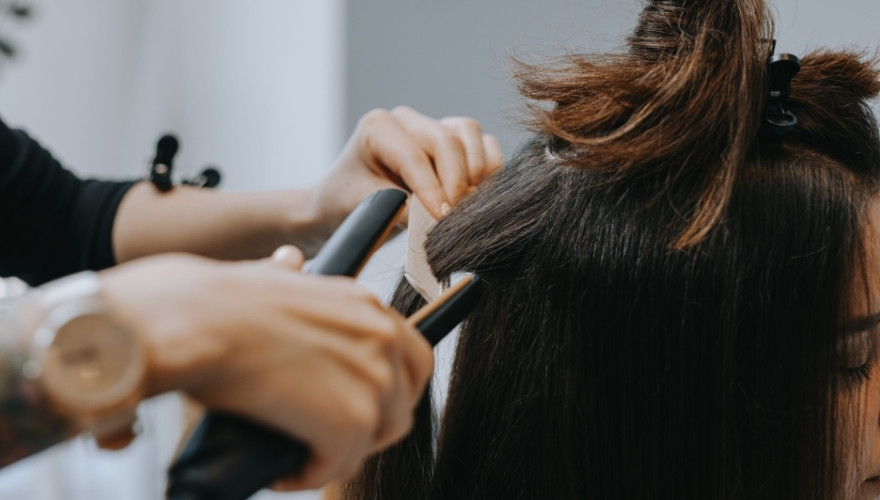
Certain keratin and chemical smoothing treatments involve applying a solution before using a flat iron. Some formulas contain formaldehyde or methylene glycol, its hydrated form.
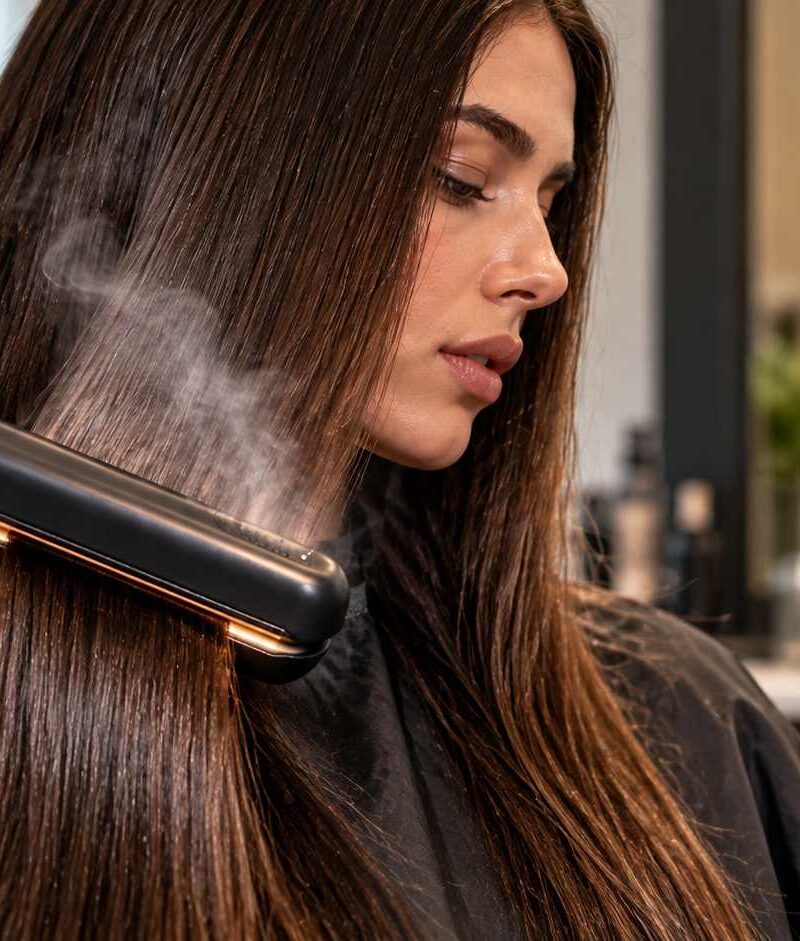
Heat can cause formaldehyde gas to enter the surrounding air. The FDA’s explanation of heated treatments identifies inhalation as a concern for clients and salon employees, particularly where ventilation is inadequate.
According to the FDA, airborne formaldehyde concentrations above 0.1 parts per million can cause irritation in some individuals. Reported symptoms include watery eyes and respiratory discomfort.
The International Agency for Research on Cancer classifies formaldehyde as a human carcinogen. Exposure risk depends on the airborne concentration and duration of contact.
A Label Can Miss the Most Important Detail
A product marketed as a formaldehyde-free keratin treatment may still warrant closer examination.
Some formulas contain methylene glycol, which can release formaldehyde during heat application. The FDA identifies both names as relevant when assessing smoothing products.
Consider a customer who books a heated straightening treatment advertised as formaldehyde-free. Before the appointment, the salon provides a Safety Data Sheet identifying methylene glycol.
The customer now has a specific reason to question the product’s suitability and request an alternative.
Professional products may be exempt from certain consumer ingredient-label requirements. However, hazardous professional chemicals are subject to workplace Safety Data Sheet requirements.
For salon employees, reviewing that document can provide information about hazards that a promotional description omits.
California, Maryland, and Washington Moved First
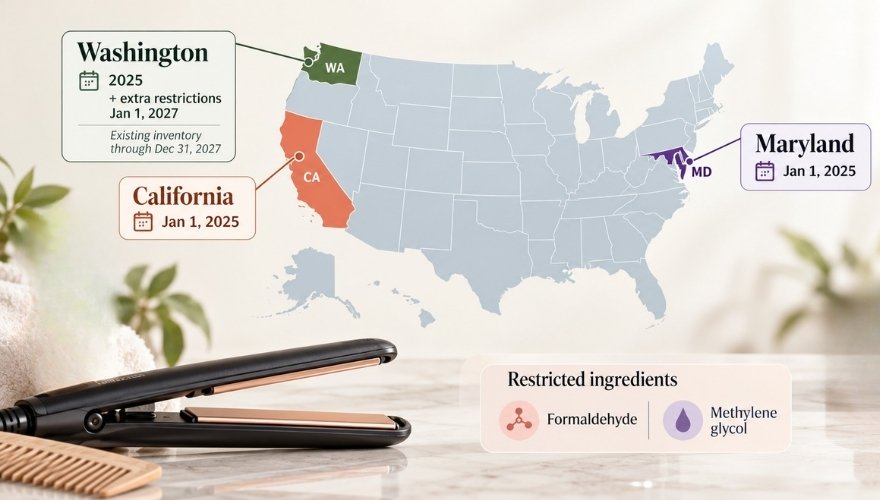
California’s Toxic-Free Cosmetics Act established restrictions on cosmetics containing intentionally added formaldehyde and methylene glycol beginning January 1, 2025.
Maryland introduced comparable restrictions under its cosmetic ingredient law, effective the same day.
Washington also restricted intentionally added formaldehyde and methylene glycol in 2025. Its Toxic-Free Cosmetics Act establishes additional restrictions on formaldehyde-releasing chemicals beginning January 1, 2027.
Washington allows qualifying existing inventory containing those additional chemicals to remain available through December 31, 2027.
The distinction matters for national manufacturers. A product that meets one state’s requirements may require reformulation before distribution in another, particularly as restrictions expand to additional formaldehyde-releasing ingredients.
What Consumers Can Check Before a Treatment
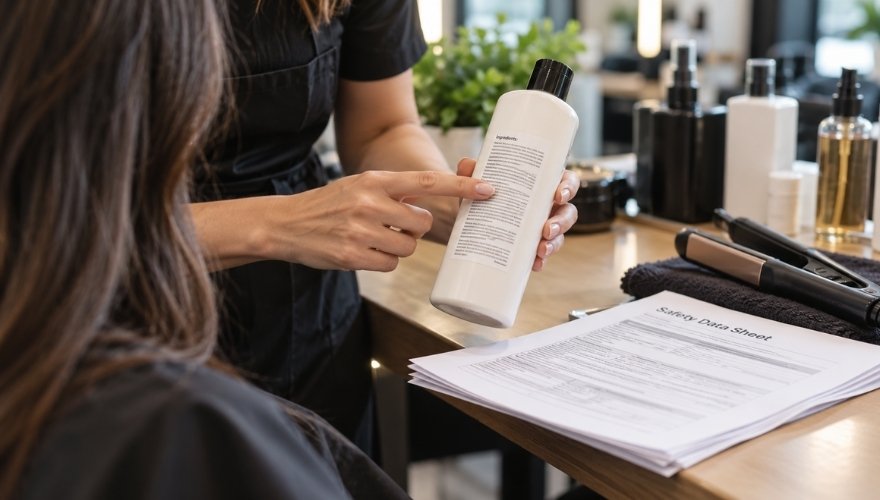
The FDA recommends asking salon professionals about the specific formula used during a smoothing procedure. A product’s ingredient information and Safety Data Sheet can help identify formaldehyde-related substances.
Conditioning products can help reduce hair static, especially in dry conditions.
The agency also advises consumers to ask about salon ventilation and the professional’s experience with the treatment.
Ventilation can reduce airborne exposure, although an open window alone cannot establish compliance with occupational exposure limits.
The Occupational Safety and Health Administration regulates workplace formaldehyde exposure. Its permissible exposure limit is 0.75 parts per million averaged over an eight-hour workday, with a short-term limit of 2 parts per million over 15 minutes.
Those limits provide a measurable framework for occupational exposure. Compliance requires appropriate assessment of workplace conditions.
For customers, requesting product information before an appointment is a useful first step. Anyone who experiences an unexpected reaction should seek appropriate medical advice.
Why the Next FDA Decision Matters
American sunscreen regulation provides an interesting comparison. Sunscreens are classified as over-the-counter drugs, and the FDA authorized the UV filter bemotrizinol in June 2026 after a lengthy regulatory history.
Hair smoothing products generally fall under cosmetic regulation, with separate rules for ingredients and workplace exposure.
I find the most consequential detail in the formaldehyde proposal to be its regulatory status. The FDA has identified the exposure concerns and specified the ingredients it intends to restrict. Publication of the federal proposal remains the next necessary step.
For salon professionals, product documentation and applicable state requirements already provide concrete standards for decisions about heated smoothing treatments.
The November 2026 target will matter only when a proposed rule appears in the Federal Register. Until then, the planned federal prohibition remains unfinished, and existing safety requirements continue to apply.