Europe Has Used This Sunscreen Filter for Decades. Americans Waited Since 2005 for It
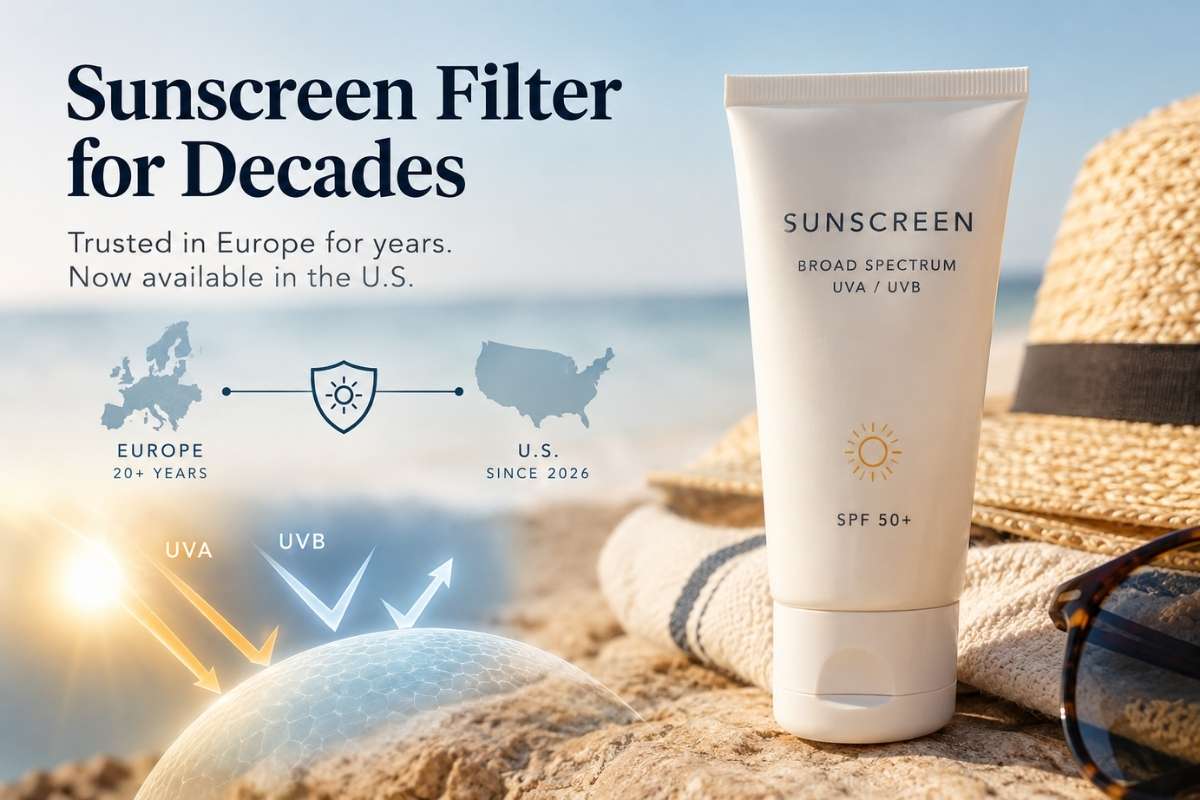
European sunscreen manufacturers have used bemotrizinol for more than two decades. The ingredient provides protection against both UVA and UVB radiation and has become an established component of many international sunscreen formulas. American manufacturers faced a much longer regulatory process before gaining access to the same filter.
On June 10, 2026, the FDA issued its final approval for bemotrizinol, making it the first new active sunscreen ingredient added to the U.S. OTC sunscreen monograph in more than 25 years. The decision took effect on August 9, 2026, permitting concentrations of up to 6% in qualifying sunscreen products. The ingredient is considered suitable for adults and children ages six months and older under the conditions established by the FDA.
Why Bemotrizinol Matters for Sun Protection
View this post on Instagram
Bemotrizinol, also known as BEMT, is an organic UV filter marketed under the names Tinosorb S and PARSOL Shield.
Its primary advantage is broad-spectrum ultraviolet absorption. UVA radiation contributes to premature skin aging, while UVB radiation is a major cause of sunburn. Both can damage the skin and increase the risk of skin cancer.
Bemotrizinol is also highly photostable, meaning its ability to absorb ultraviolet radiation remains relatively stable during light exposure. Some other organic filters are more susceptible to photodegradation, which sunscreen formulators must consider when developing finished products.
In its scientific assessment of bemotrizinol, the FDA highlighted low systemic absorption following topical application. The available evidence also indicated a low potential for skin irritation under the evaluated conditions.
Low systemic absorption is particularly relevant for a product intended for repeated application over large areas of skin. It forms part of the overall safety assessment alongside other toxicological evidence.
What Does the 6% Limit Actually Mean?
Under the FDA’s final order, bemotrizinol may represent up to 6% of the finished sunscreen formulation.
For a 100-gram sunscreen, the maximum permitted concentration corresponds to six grams of the active ingredient.
That figure does not determine the finished product’s SPF. Sun protection performance depends on the complete formulation and the results of standardized testing.
Bemotrizinol can be combined with certain other approved UV filters under the conditions established by the FDA.
For example, a manufacturer could develop a sunscreen containing bemotrizinol alongside another permitted filter to achieve a particular UVA and UVB absorption profile. The finished product would still need to meet applicable SPF and broad-spectrum testing requirements.
Why Did Americans Wait More Than 20 Years?
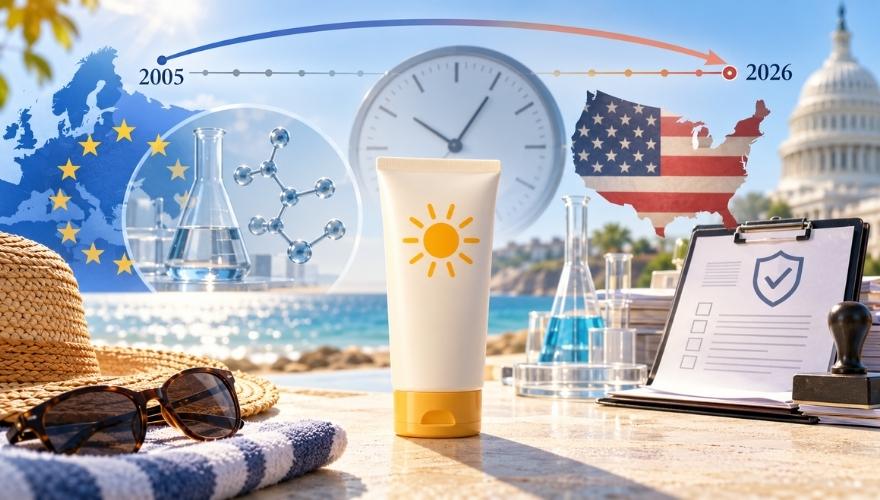
Bemotrizinol entered the U.S. regulatory process in 2005, despite already being available in European sunscreen products.
The main difference between the two markets concerns how sunscreens are regulated.
In the European Union, sunscreens are classified as cosmetics. In the United States, the FDA regulates them as over-the-counter drugs.
American sunscreen manufacturers must therefore comply with drug-specific requirements for active ingredients, including evidence of safety and effectiveness.
The regulatory process also involves evaluating systemic absorption. The FDA considers how much of an ingredient may enter the body under conditions representative of substantial sunscreen use.
DSM Nutritional Products LLC, part of dsm-firmenich, submitted a formal request to add bemotrizinol to the OTC sunscreen monograph on September 23, 2024.
The FDA published its proposed order in December 2025, followed by the final decision in June 2026.
The formal review of the latest application was considerably shorter than the ingredient’s overall history with American regulators. Changes to the OTC monograph system helped establish a more direct administrative route for evaluating new ingredients.
When Will American Sunscreens Containing BEMT Become Available?
On August 10, 2026, dsm-firmenich confirmed that PARSOL Shield was available for use in American sunscreen formulations.
his milestone marks an important step in expanding U.S. sunscreen options, as discussed in The First New Sunscreen Filter Since the 1990s Is Finally on Sephora Shelves.
BASF also announced the U.S. launch of Tinosorb S, following a licensing agreement with DSM Nutritional Products.
The FDA granted an 18-month exclusivity period to DSM and its authorized licensees. The period began on August 9, 2026, under the final administrative order. Such exclusivity concerns commercial rights under the relevant regulatory framework. It does not represent an additional safety review period.
Ingredient authorization allows manufacturers to begin developing qualifying products for the American market. Individual sunscreen formulas must still comply with applicable testing and labeling requirements.
For consumers, the distinction matters because regulatory approval of an ingredient does not establish the SPF or water resistance of every future product containing it.
What Should American Consumers Look for?
Bemotrizinol expands the range of UV filters available to sunscreen formulators in the United States. Its photostability provides additional flexibility for products intended to deliver broad-spectrum protection.
The FDA’s findings on low systemic absorption and limited irritation potential are also encouraging for routine sunscreen use. Individual tolerance still depends on the finished formulation.
When choosing a sunscreen, the American Academy of Dermatology recommends broad-spectrum protection with SPF 30 or higher.
Water resistance is another useful label specification, particularly for outdoor activities. Sunscreen should generally be reapplied every two hours outdoors, with additional application after swimming or sweating according to the product directions.
A highly photostable UV filter cannot eliminate the need for proper application. The amount of sunscreen used and the quality of the finished formulation remain essential to achieving the protection stated on the label.
The Next Test Is the Finished Sunscreen
Bemotrizinol’s photostability and low systemic absorption make it an interesting addition to the American sunscreen market. Those characteristics give manufacturers more flexibility when developing products intended for everyday use.
What interests me most is how American manufacturers will use the newly authorized filter. I would pay particular attention to the finished products’ UVA protection and their performance under standardized testing.
A sunscreen containing 6% bemotrizinol is not automatically superior to one containing a lower concentration. Its effectiveness depends on the complete formulation.
After more than two decades of regulatory history, American manufacturers finally have access to another established broad-spectrum UV filter. The most useful measure of its success will be the quality of the sunscreens consumers can purchase and use consistently.