Perfume Labels May Soon Have to Name the Allergens Behind the Word “Fragrance”
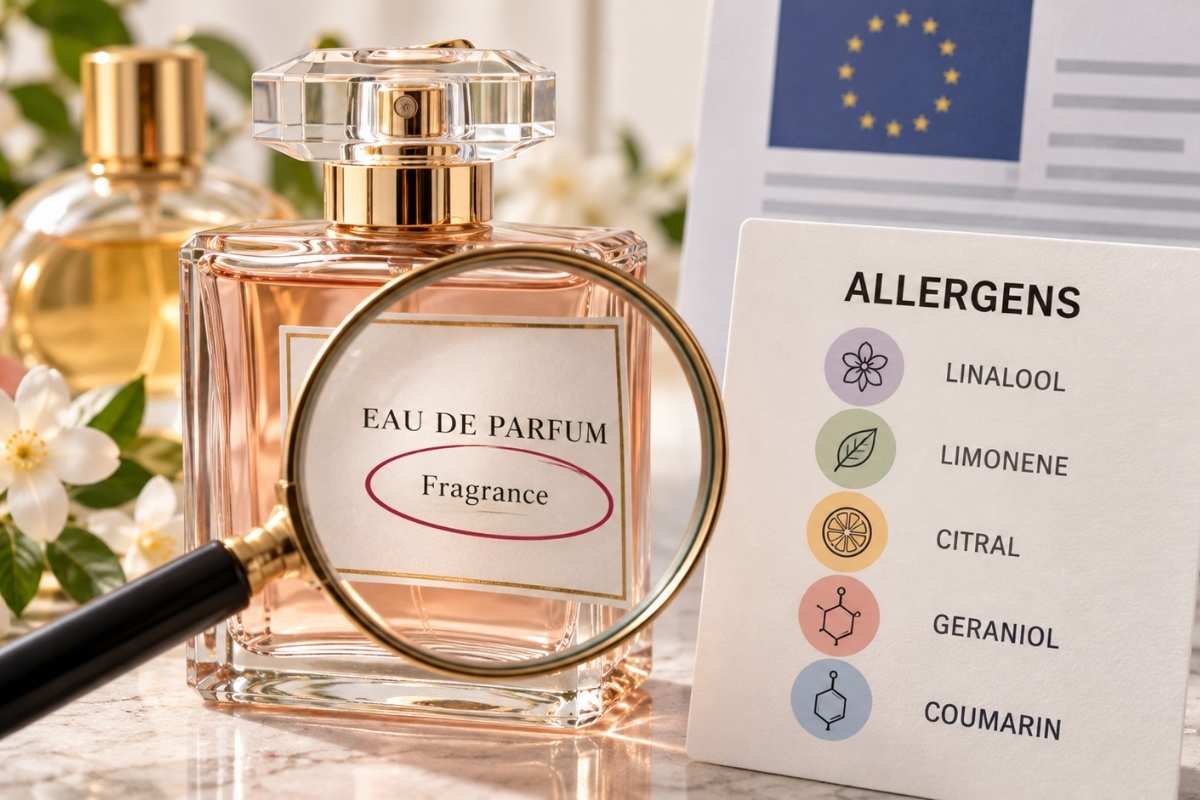
Look at the ingredient list on a perfume box, and you’ll often see alcohol near the top, followed by a word such as “Parfum” or “Fragrance.” That single term can represent a complicated mixture of scent ingredients. For someone with a confirmed allergy, the label provides very little information about which substance might cause a skin reaction.
As of July 31, 2026, perfume manufacturers in the European Union must individually disclose a much larger number of fragrance allergens when their concentrations exceed specified limits. Canada has introduced similar requirements, and the U.S. Food and Drug Administration is still developing its own rules. Consumers will have a better opportunity to identify ingredients they already know they are allergic to.
What interests me most about the new regulations is how much they could change an ordinary perfume purchase. When I examine an ingredient label through the eyes of someone with a confirmed allergy, I keep coming back to one question: Can that person identify a problematic ingredient before the product touches their skin? The new requirements address precisely that problem.
What Is Changing on Perfume Labels?
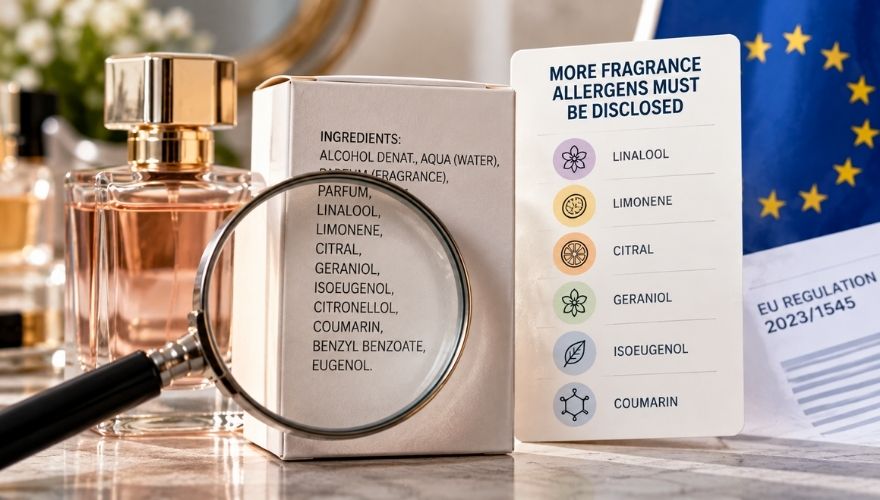
In July 2023, the European Commission adopted Regulation 2023/1545, expanding the requirement to individually disclose fragrance allergens in cosmetic products. The previous European system covered 24 allergens subject to individual labeling requirements. The new regulation adds another 56 allergens and updates existing categories, including certain groups of related substances.
Manufacturers may still use the collective term “Parfum” for a fragrance composition. However, they must also identify individual allergens when their concentrations exceed the regulatory thresholds.
Consider someone with a confirmed contact allergy to isoeugenol. Before purchasing a new perfume, that person wants to know if the formula contains the substance. A general “Fragrance” declaration cannot answer the question, but an expanded ingredient list makes verification considerably easier.
How Much of an Allergen Must Be Present?
For perfumes that remain on the skin, the disclosure threshold is 0.001%. For rinse-off cosmetic products, the threshold is 0.01%.
Expressed by weight, 0.001% equals one milligram of a substance in 100 grams of finished product. In a 50-gram product, the same concentration corresponds to half a milligram.
The regulatory threshold determines when an ingredient must appear on the label. It does not establish a universal safe concentration for every person with an allergy. Someone who has already developed sensitivity may experience a reaction at very low exposure levels.
The FDA Is Still Developing U.S. Rules
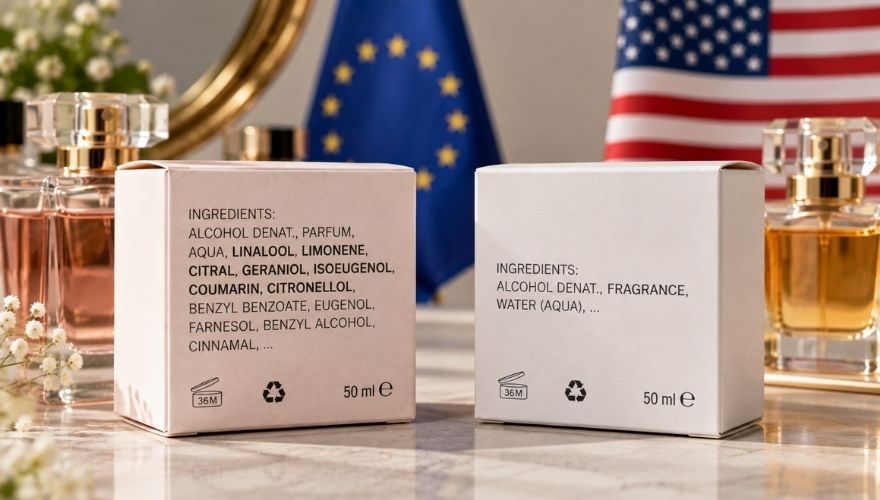
In the United States, cosmetics manufacturers have traditionally been allowed to identify fragrance mixtures under the collective term “Fragrance.” The practice is associated with the protection of trade secrets. Congress passed the Modernization of Cosmetics Regulation Act, commonly known as MoCRA, in late 2022.
The law established a requirement for individual disclosure of certain fragrance allergens and directed the FDA to identify the substances covered by the rule.
Under the U.S. regulatory agenda, publication of a proposed rule was scheduled for November 2026. That date represents a regulatory target rather than a confirmed effective date for a final requirement.
American consumers may therefore encounter European perfume labels that identify more individual allergens than comparable labels on products intended for the domestic market.
Full disclosure of a perfume formula remains a separate issue.
The regulations focus on identifying relevant allergens, allowing manufacturers to protect the remaining elements of their commercial fragrance compositions.
Canada Has Expanded Its List to 81 Allergens
Health Canada introduced mandatory fragrance allergen disclosure in several stages. Beginning April 12, 2026, manufacturers were required to identify 24 specified fragrance allergens above the applicable concentration thresholds. For new cosmetic products, the list expanded to 81 allergens on August 1, 2026.
Existing products have additional time to comply. Canada’s cosmetic labeling guidance establishes August 1, 2028, as the deadline for applying the expanded list to previously marketed products.
Canada has linked its requirements to the European regulatory list, allowing alignment with future amendments to the relevant European standards.
Why Can Two Genuine Perfumes Have Different Ingredient Labels?
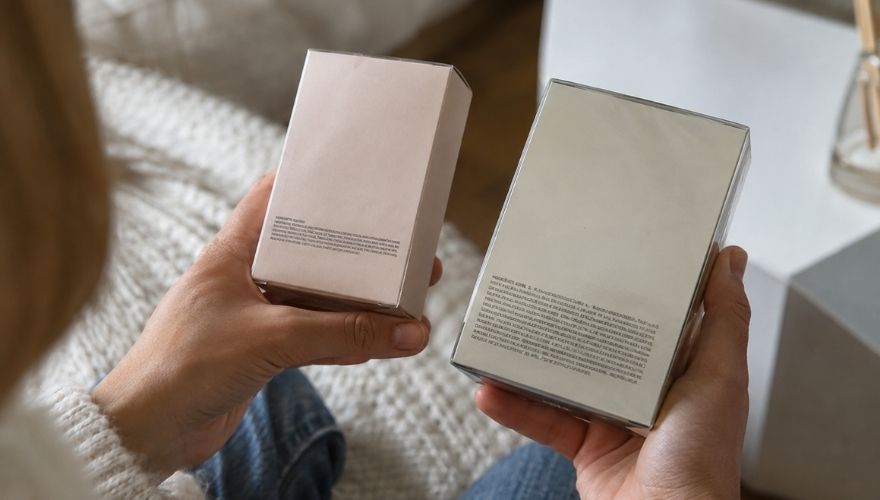
During the transition period, manufacturers may sell packages that entered the market under different stages of the regulations.
| Market | New Products | Existing Products |
|---|---|---|
| European Union | July 31, 2026 | July 31, 2028 |
| Canada | August 1, 2026 | August 1, 2028 |
| United States | Final date not established | Depends on future FDA rules |
Compliance deadlines based on the European Commission and Canadian regulations. Status as of October 2026.
A shorter ingredient list on an older genuine perfume is therefore not automatically evidence of a regulatory violation. The date the product entered the market and its intended destination are important factors.
Which Allergens Might Appear on the New Labels?
Linalool and limonene are among the well-known fragrance allergens. Both substances occur in natural raw materials and are also used in perfume formulations.
Linalool is present in numerous essential oils, while limonene is particularly associated with citrus fragrance materials.
Other names that may appear on ingredient labels include:
- Citral: An ingredient with a characteristic citrus scent.
- Eugenol: A substance associated with the aroma of cloves.
- Geraniol: An ingredient found in various floral fragrance materials.
- Coumarin: A sweet-smelling substance present in certain natural materials.
The presence of an allergen on an ingredient list does not mean every consumer will develop an allergic reaction.
What Happens When Fragrance Ingredients Oxidize?
Certain fragrance molecules react with oxygen in the air and can form oxidation products with a stronger potential to cause allergic reactions.
A 2022 study analyzed patch test results from 5,773 patients with dermatitis. Positive reactions to oxidized linalool were recorded in 7% of participants. For oxidized limonene, the figure was 5.1%.
The research involved patients with dermatitis, so the percentages should not be interpreted as allergy prevalence in the general population.
I find the clinical significance of those chemical changes particularly relevant. An ingredient’s oxidation products can be associated with reactions that matter to patients.
Keep perfume bottles tightly closed and away from direct sunlight. Proper storage reduces exposure to unfavorable conditions, although it cannot guarantee protection against allergic reactions.
How Common Are Fragrance Allergies?
The explanatory material accompanying the 2023 European regulation estimated that between 1% and 9% of the European Union population has an allergy to at least one fragrance allergen. The broad range reflects differences in assessment methods and the populations examined.
Allergic contact dermatitis is an immune response that develops after a person becomes sensitized to a particular substance. Subsequent exposure can cause itching or eczema, often in areas of skin that have come into contact with the allergen.
The American Academy of Dermatology explains that patch testing can help identify substances responsible for contact dermatitis.
A dermatologist applies small amounts of selected allergens to the skin and checks for reactions over the following days. Patients can then receive specific information about the ingredients they should avoid.
What Does Perfume Shopping Look Like With a Confirmed Allergy?
Suppose a dermatologist has confirmed that a consumer is allergic to linalool.
The consumer is considering two perfumes at similar prices.
The first package lists only the collective term “Fragrance.” The available information is insufficient to reliably establish the