Why Is My Hair So Staticky? How to Calm It When the Air Turns Dry
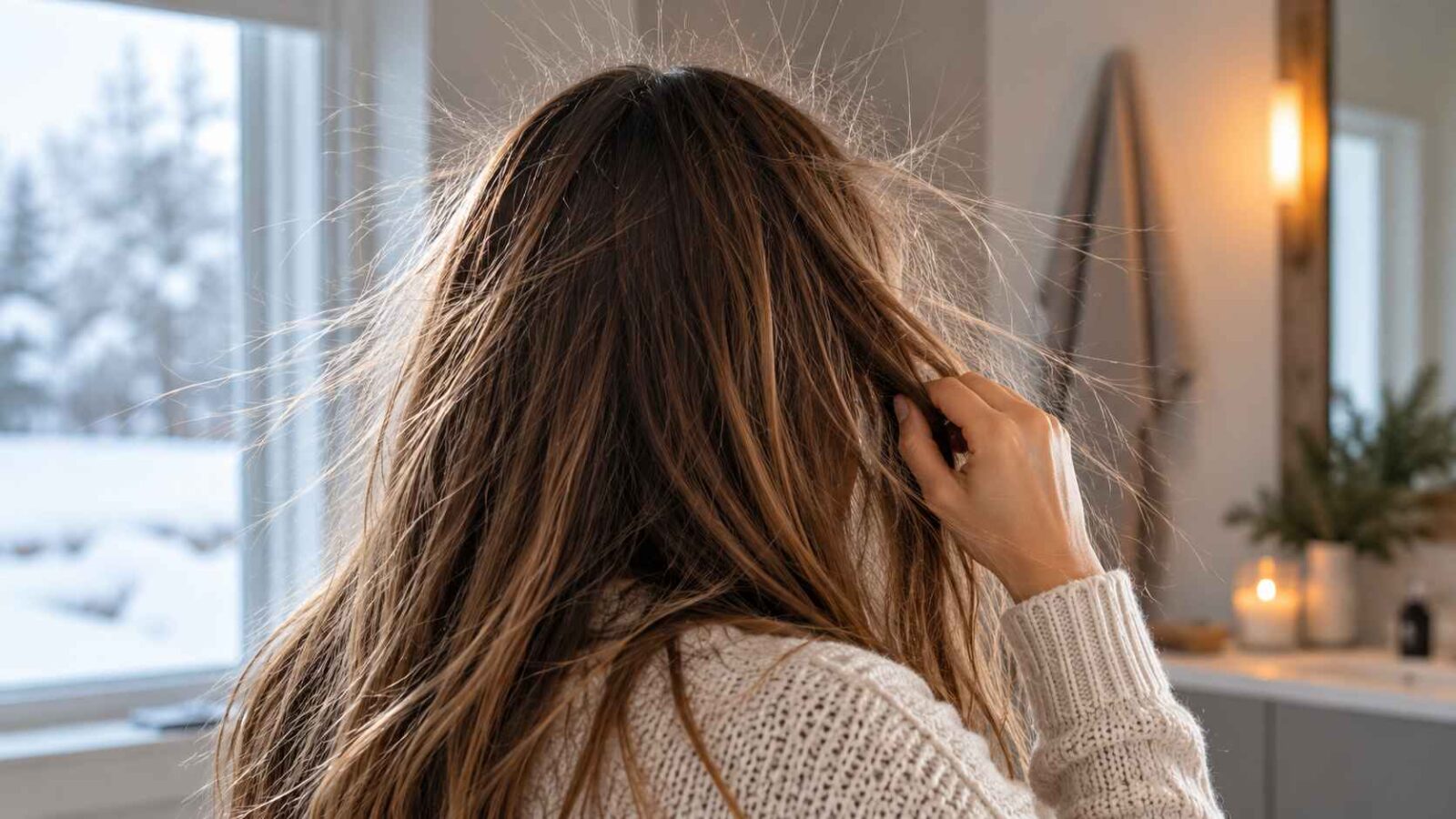
Static electricity develops when contact and friction transfer electrical charge between different materials. Hair strands with the same type of charge repel one another, causing individual strands to lift away from the rest of your hair. Low relative humidity allows that charge to persist longer, making the problem particularly noticeable during colder months.
Your hair becomes staticky because friction builds up electrical charge, and dry air allows that charge to remain on the strands. A small amount of leave-in conditioner can quickly calm flyaways. Maintaining indoor relative humidity between 30% and 50% can help reduce recurring static, especially when combined with less friction during your regular hair-care routine.
What interests me about seasonal hair static is how dramatically the same hair can behave under different conditions. A routine that works perfectly in July may suddenly produce flyaways in December. The explanation often begins with the air inside your home.
What Happens to Your Hair During Winter?
Humidity affects how long the charge persists. Water molecules in the surrounding environment influence electrical conductivity and charge dissipation. In dry conditions, accumulated charge can remain on hair for longer periods.
Hair condition also plays a role. Chemical treatments and repeated exposure to high temperatures can damage the cuticle, the protective outer layer of each strand. A rougher surface can increase friction during brushing or contact with clothing.
Winter creates favorable conditions for all of those effects. Heated indoor air often has low relative humidity, and frequent contact with hats or scarves provides additional opportunities for charge transfer.
How to Keep Your Hair Smooth in Dry Air
A lightweight leave-in conditioner is one of the simplest ways to control staticky hair. Conditioning ingredients improve lubrication along the hair surface and reduce friction between strands. The American Academy of Dermatology confirms that leave-in products can reduce static and make hair easier to comb, especially after chemical treatments or frequent heat styling.
Board-certified dermatologist Dr. Zoe Draelos explains that improvements in manageability can appear immediately after application. She also notes that regular rinse-out conditioner may be insufficient for some hair types exposed to repeated styling.
Start with a small amount, distribute it between your palms, and gently smooth it over the affected areas, following the product’s directions. Fine hair generally needs less conditioner, particularly near the roots. Concentrating the product on the mid-lengths and ends can help prevent a greasy appearance.
Indoor humidity deserves attention as well. The Environmental Protection Agency’s humidifier recommendations explain that adding moisture to dry indoor air can help reduce static electricity. EPA advises keeping humidity at or below 50%, with approximately 30% to 50% generally recommended for indoor conditions.
Consider a bedroom where a hygrometer shows 25% relative humidity. Gradually increasing moisture toward the recommended range may reduce conditions that favor static buildup. A hygrometer provides a measurable reference, particularly during periods of continuous indoor heat.
Humidifiers require regular maintenance. EPA recommends emptying and drying portable humidifier tanks daily and thoroughly cleaning them every three days. Excess moisture can encourage mold growth, so condensation around windows deserves attention.
Winter clothing introduces another source of friction. Celebrity hairstylist Bridget Brager discussed the relationship between dry air and frequent contact with hats in Good Housekeeping’s guide to static hair. A smooth silk or satin lining may reduce mechanical friction, especially for longer hair. A smooth pillowcase may offer similar benefits when hair frequently tangles overnight.
Your washing routine can influence the result. Conditioner after shampooing improves lubrication, and moderate blow-dryer temperatures help limit additional stress on damaged strands. Ionic dryers may assist with flyaway control through their effect on electrical charge, although performance varies among devices.
Before purchasing another styling product, I would check indoor humidity and the amount of conditioner already in use. Small adjustments to everyday conditions may provide a more consistent result than frequent applications of additional products.
Why Static Hair and Frizz Can Look Similar
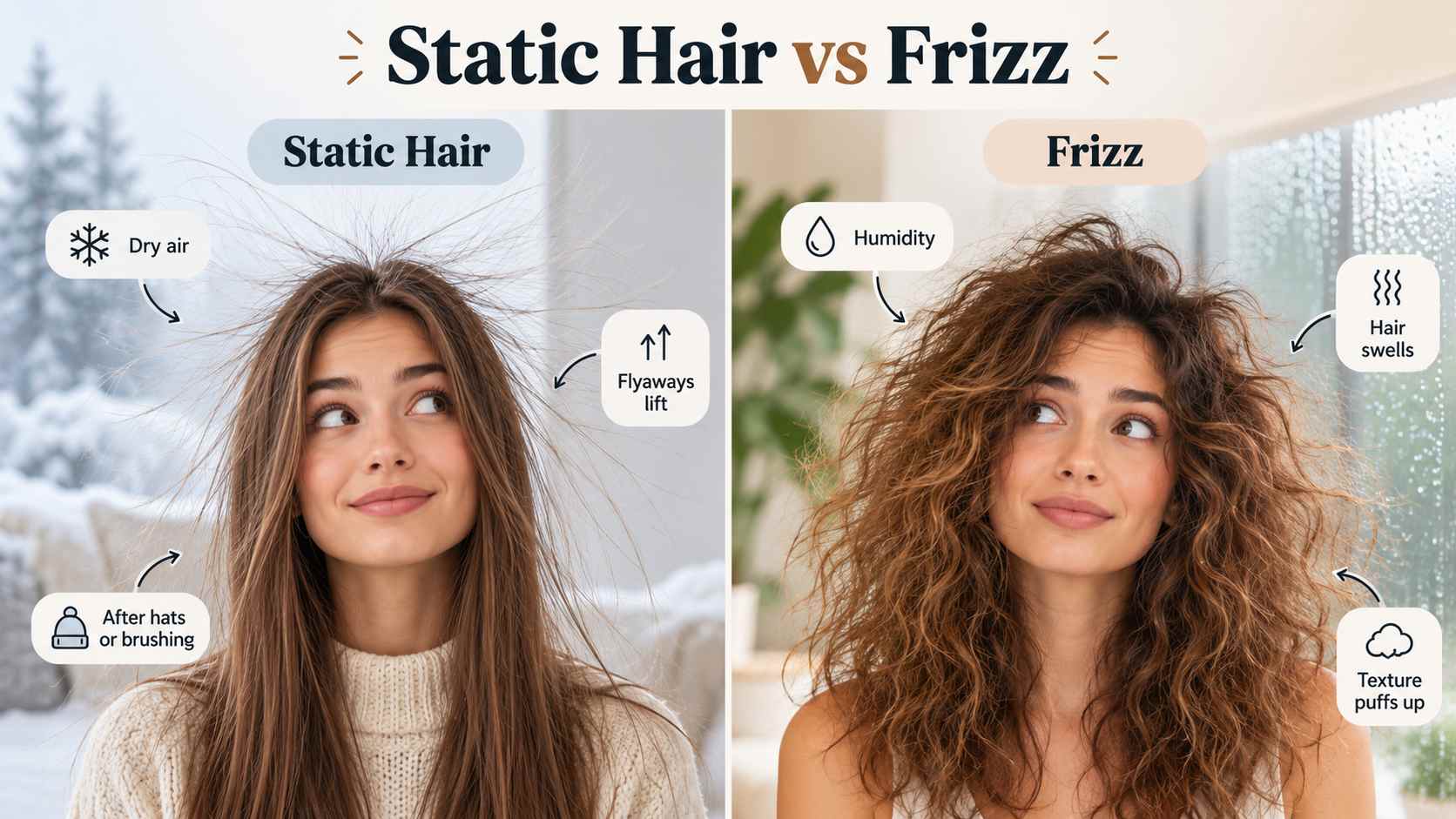
Static electricity and frizz can create a similar appearance, although different physical processes contribute to each condition.
Electrostatic repulsion becomes particularly noticeable after contact with clothing or a brush. Frizz often develops through changes in the arrangement of hair fibers associated with moisture exposure and existing damage.
For example, strands that suddenly lift after removing a sweater suggest static buildup. Hair that gradually expands in humid weather may be responding to changes in moisture within the fibers.
Both effects can occur together, particularly in hair weakened by bleaching or repeated heat exposure. Conditioning products may improve manageability in either situation, with the most suitable formula dependent on the hair’s condition.
Adjust Your Routine Before the Next Cold Morning
Begin with the moment the problem appears. Hair that becomes staticky after removing a winter hat may benefit from a smoother lining. Flyaways that develop during morning brushing suggest a reason to examine conditioning habits and bedroom humidity.
A small amount of leave-in conditioner can provide a quick cosmetic improvement. A wide-tooth comb can help separate tangled strands gently, with less repeated contact than excessive brushing.
One popular shortcut deserves caution. Laundry dryer sheets contain ingredients intended for fabrics, and some contain fragrances that may irritate sensitive skin. A product specifically formulated for hair is the more appropriate choice.
Persistent breakage or scalp irritation may require a separate assessment. The American Academy of Dermatology’s recommendations emphasize gentle hair care and professional evaluation when damage continues despite adjustments to the routine.
Static hair is strongly influenced by environmental humidity and repeated friction. Maintaining suitable indoor conditions and using appropriate conditioning products can make winter flyaways easier to control without an elaborate hair-care routine.