Formaldehyde Is Still Legal in Hair Straighteners. The FDA’s New Target Date Is November
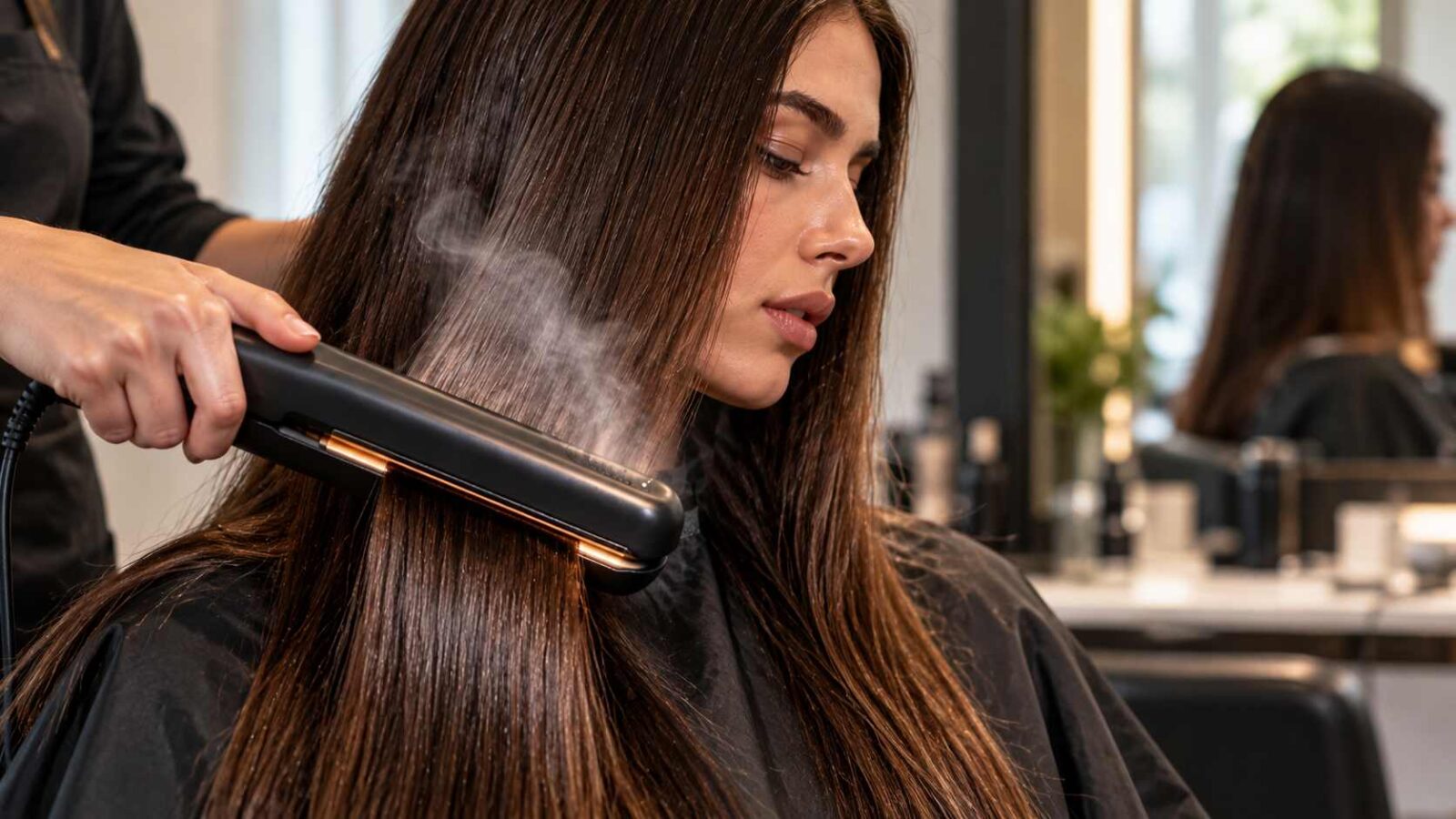
Hair straightening treatments can release formaldehyde as soon as a stylist passes a hot flat iron over treated hair. The gas enters the salon air, where both workers and clients may inhale it. The US Food and Drug Administration (FDA) has warned about the exposure for years, yet the proposed federal ban has faced repeated delays.
Formaldehyde remains legal in certain hair straightening products in the United States, and the FDA now plans to publish its proposed ban in November 2026. Under the agency’s official regulatory agenda, the proposal would cover formaldehyde and chemicals that release it during heat application. November is the target for publishing the proposed rule, not the date a ban would take effect.
Until federal requirements change, salons may continue to use products that comply with existing safety and labeling rules. Consumers therefore have good reason to examine the ingredients used during their appointments.
Why Hair Straightening Treatments Release Formaldehyde
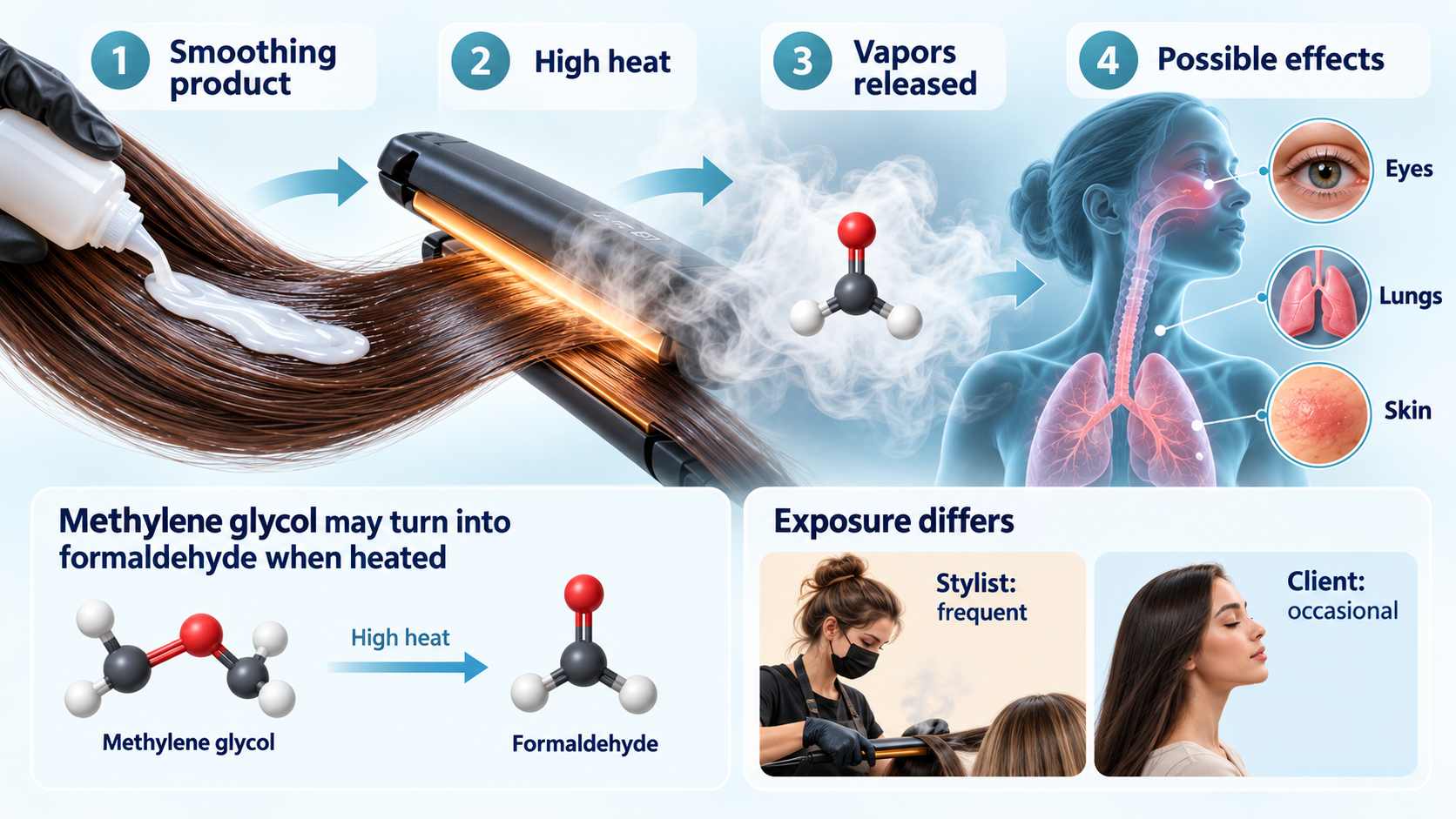
During Brazilian blowouts and similar smoothing treatments, a stylist applies a chemical product to the hair and then uses a flat iron at high temperatures. Heat helps achieve the desired finish, but certain formulations release formaldehyde gas during the process.
The concern also applies to products that list methylene glycol instead of formaldehyde. Methylene glycol is the hydrated form of formaldehyde and can release the gas during treatment.
The FDA’s guidance on hair smoothing products identifies eye irritation and respiratory problems as possible effects of exposure. Sensitive individuals may also experience allergic skin reactions.
Airborne concentrations and exposure duration influence the risk. A stylist who performs several treatments every week experiences a different exposure pattern than a client who visits a salon a few times a year.
Why a “Formaldehyde-Free” Label Deserves a Second Look
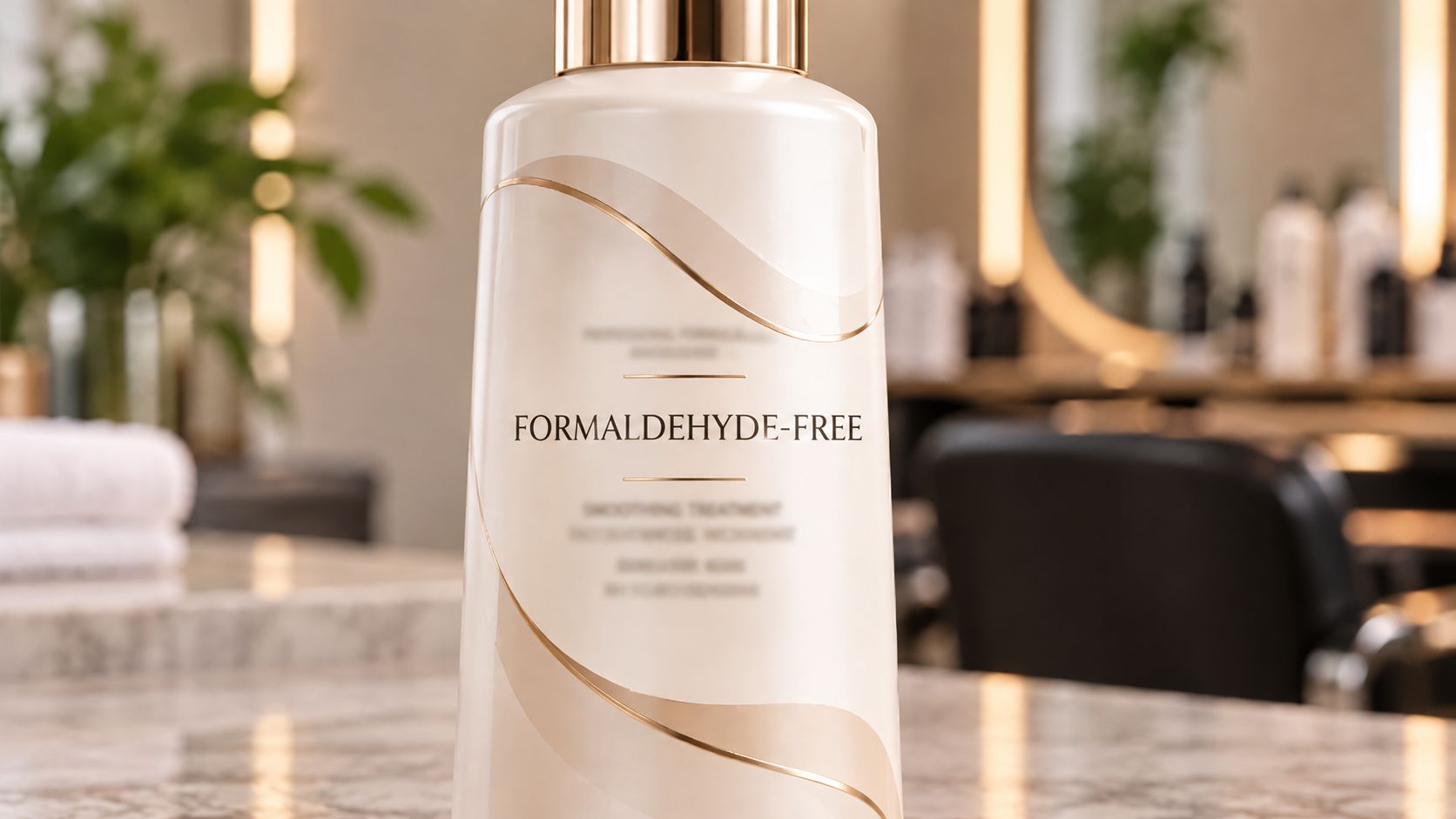
A marketing claim on the front of a bottle provides limited information about its chemical composition.
The Occupational Safety and Health Administration (OSHA) has previously identified products labeled formaldehyde-free that nevertheless released the gas during use.
Three ingredient names deserve particular attention:
- Formaldehyde: The chemical itself.
- Formalin: An aqueous solution of formaldehyde.
- Methylene glycol: A related form capable of releasing formaldehyde.
Beyond the ingredient label, salons should have access to a product’s Safety Data Sheet (SDS). The document provides additional information about chemical hazards.
What Is Actually Scheduled for November?
The FDA previously planned to publish its proposed ban, but the timetable has shifted several times. An earlier regulatory agenda listed December 2025.
The updated schedule identifies November 2026 as the target for a Notice of Proposed Rulemaking.
The process involves several stages. After publication, members of the public generally have an opportunity to submit comments. The agency then reviews the feedback before deciding on a final rule.
Official records also show that the proposal, identified by regulatory number 0910-AI83, was submitted for review on August 6, 2026 and listed at the proposed-rule stage.
The target could change again. An agency timetable is not a legally binding deadline.
The proposed ban would address products applied to hair and heated during straightening or smoothing treatments. It would cover ingredients that release formaldehyde under the intended conditions of use.
What Research Reveals About the Health Risks
The International Agency for Research on Cancer classifies formaldehyde as carcinogenic to humans. Long-term or substantial exposure is associated with certain cancers, including nasopharyngeal cancer.
Researchers have also examined the potential long-term health effects of chemical hair straighteners more broadly.
A 2022 study by the National Institutes of Health analyzed data from 33,497 women between the ages of 35 and 74.
Over approximately 11 years of follow-up, researchers identified 378 cases of uterine cancer. Women who used chemical hair straightening products more than four times a year had over twice the risk of developing uterine cancer compared with women who reported no use.
Researcher Alexandra White explained that the estimated risk by age 70 was 1.64% among women who never used the products, compared with 4.05% among frequent users.
The difference is 2.41 percentage points, equivalent to approximately 24 additional cases per 1,000 women under the researchers’ model.
The study identified an association. It did not establish formaldehyde as the specific cause of the reported cancers. Hair straightening products may contain various chemicals, and individual product formulations were not available for every participant.
Salons Already Have Obligations Under OSHA Rules
Even before the FDA adopts any new restrictions, American employers must comply with existing occupational standards for formaldehyde exposure.
OSHA establishes airborne exposure limits for workplaces. Employers must assess exposure and implement appropriate protective measures.
Federal formaldehyde exposure limits for salon workers
| Concentration | Measurement period | Regulatory significance |
| 0.5 ppm | 8-hour average | Action level that triggers additional exposure-monitoring obligations |
| 0.75 ppm | 8-hour average | Permissible occupational exposure limit |
| 2 ppm | 15-minute period | Maximum permitted short-term exposure |
Source: OSHA guidance for hair salons. ppm means parts of formaldehyde per million parts of air.
Adequate ventilation can reduce airborne concentrations. Choosing a product that does not release formaldehyde during use avoids exposure associated with that particular source.
How to Check a Treatment Before Your Salon Appointment

Suppose you book a keratin treatment advertised to keep your hair smooth for several months. The salon describes the service as formaldehyde-free but never identifies the product.
Before your appointment, ask for the product’s exact name and its Safety Data Sheet. Your stylist should know which chemicals are involved and what precautions the manufacturer recommends during heat application.
Two questions can help:
- Does the product contain formaldehyde or methylene glycol?
- Does the manufacturer warn about gas release during heat application?
If salon staff cannot provide reliable ingredient information, consider another treatment or a salon with complete product documentation.
Eye irritation during the procedure or difficulty breathing calls for an immediate end to exposure. Anyone who develops serious respiratory symptoms should seek medical attention promptly.
Consumers can also report cosmetic-related adverse reactions directly to the FDA.
In the End, November Is a Target Date
The FDA has established a new target for a regulatory proposal that could remove formaldehyde from certain hair straightening products sold in the United States.
A final ban would require further regulatory action. Its effective date would depend on the rule ultimately adopted.
For now, consumers can make a more informed decision before their next treatment. Reviewing the ingredient list and requesting the relevant safety documentation are steps you can take before your next salon appointment.