Salmon DNA Is Skincare’s Buzziest Ingredient, but the Best Evidence Comes From Injections
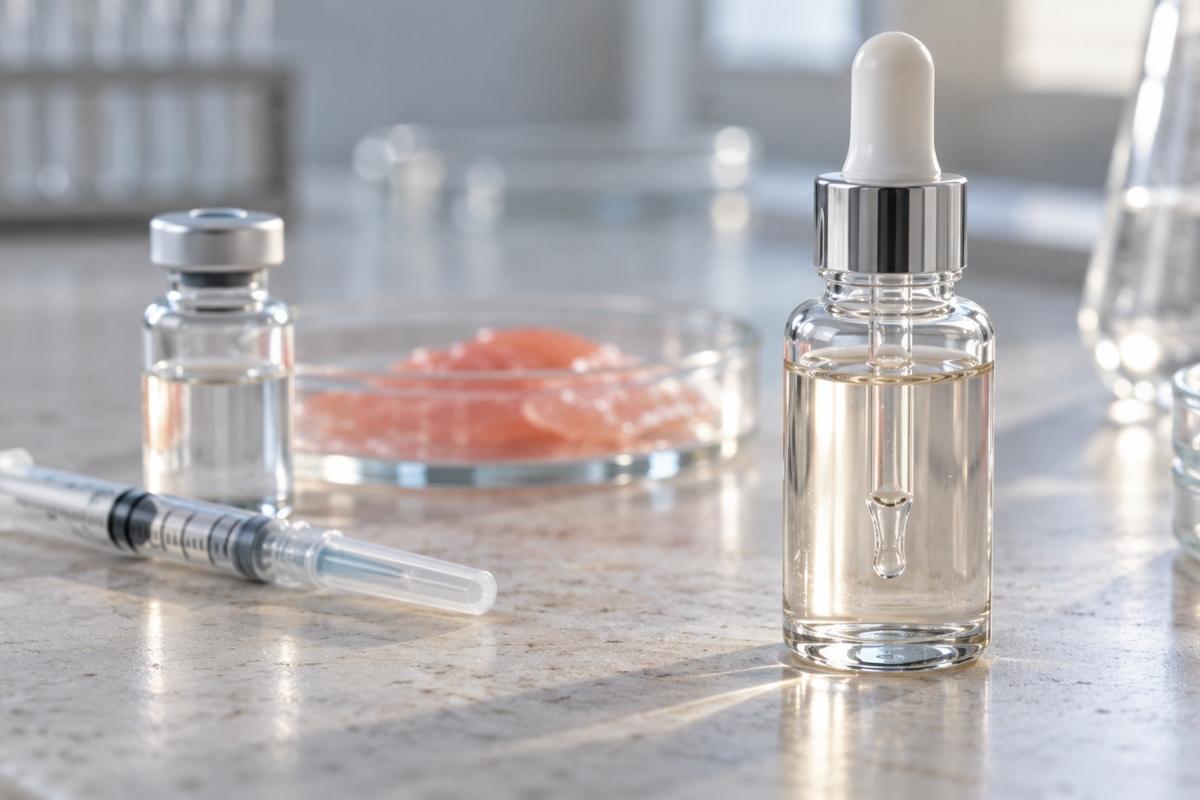
Salmon DNA has become a popular ingredient in skincare, particularly in Korean beauty serums marketed for improved skin elasticity and fewer visible wrinkles. Products containing PDRN now appear alongside familiar ingredients such as retinol. Their popularity raises a question about how well the scientific evidence supports the claims on the packaging.
Salmon DNA, commonly marketed as PDRN, has shown promising results in clinical studies involving injections, particularly for wound repair. Evidence for ordinary topical serums remains limited, although a 2026 clinical study reported improvements with a specially formulated PDRN cream. The results depend on the preparation and its ability to reach the relevant skin layers.
What interests me is the difference between the research used to promote PDRN and the products consumers actually purchase. A serum applied at home and a treatment administered beneath the skin involve different delivery methods. That distinction deserves attention before spending money on either option.
The Original Research Had Little to Do With Beauty Serums
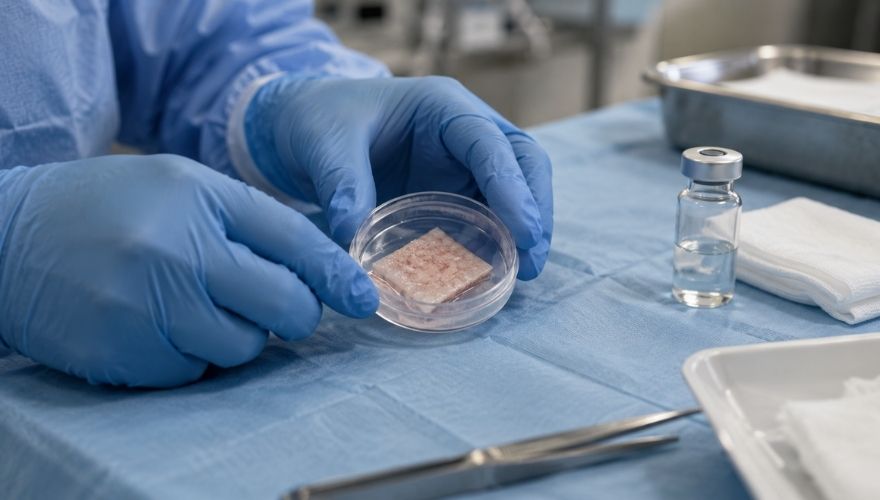
PDRN stands for polydeoxyribonucleotide, a preparation of purified DNA fragments commonly derived from salmonid fish. Researchers have investigated its potential role in tissue repair for decades.
A 2001 clinical trial examined wound recovery in 26 patients following skin-graft procedures. Fourteen received PDRN through injections, while 12 received a placebo.
After seven days, the PDRN group showed significantly greater re-epithelialization, the process through which new cells restore the skin’s surface. The researchers also reported faster recovery at the end of the observation period.
PDRN has been investigated for its activity involving adenosine A2A receptors, which participate in tissue repair responses. Laboratory findings have also examined its potential effects on processes associated with new blood vessel formation.
Such research provides a biological rationale for further investigation. The clinical findings concerned medically administered PDRN rather than cosmetic products applied to intact facial skin.
What 183 Patients Tell Us About the Evidence
An August 2026 systematic review of randomized trials evaluated seven studies involving 183 participants. Four investigated skin rejuvenation, one examined postoperative scar prevention, and two assessed wound healing.
Researchers reported improvements across several clinical outcomes, with the most consistent benefits appearing in wound-healing applications.
The review included both polynucleotide and PDRN treatments. Those preparations can differ in their molecular characteristics, so the combined results should be interpreted carefully.
The researchers also identified limitations involving small participant groups and differences in treatment protocols. Larger trials are needed to establish which preparations offer reliable benefits for particular dermatological concerns.
For consumers, the distinction is straightforward: evidence supporting an injected treatment cannot automatically establish the effectiveness of a commercially available face serum.
Can Salmon DNA Actually Pass Through Your Skin?
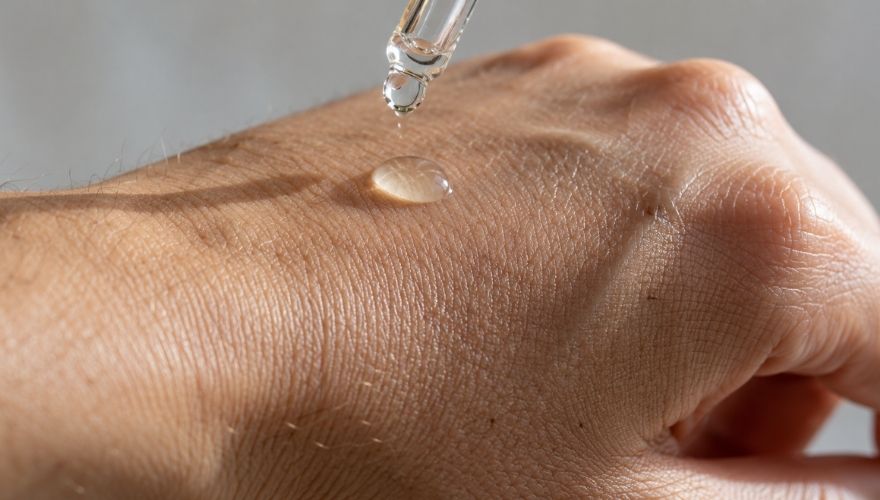
The outermost skin layer, known as the stratum corneum, acts as a protective barrier. It restricts the passage of many substances applied to the surface.
Molecular size influences how readily an ingredient can penetrate intact skin. Conventional PDRN preparations contain relatively large DNA fragments, creating a potential obstacle for topical delivery.
In a Los Angeles Times examination of salmon DNA skincare, dermatologist and geneticist Dr. Macrene Alexiades discussed the difficulty of delivering typical PDRN molecules through the skin barrier.
A product’s formulation can influence penetration, and different PDRN preparations may behave differently. Evidence for one formulation therefore provides limited information about another.
I consider that distinction especially useful when reviewing skincare advertising. The presence of an ingredient on a label confirms its inclusion in the formula. Its concentration at the intended site of action requires separate evidence.
One New Study Gives Topical PDRN a Stronger Case
A 2026 study published in PLOS One investigated a medium-length preparation identified as PDRN-850K.
Researchers examined its biological activity in human skin cells and evaluated penetration using laboratory skin models. Additional experiments assessed delivery in human skin.
The clinical component involved 31 participants in a randomized, double-blind, split-face comparison. Researchers applied a cream containing 0.1% PDRN-850K to one side of the face and a cream containing 0.1% retinol to the other over 28 days.
The PDRN preparation produced approximately twice the improvement across several measured parameters, including wrinkles around the eyes and dermal thickness.
The trial provides meaningful evidence for a specific topical formulation. Its short duration limits conclusions about long-term effectiveness.
There is also a relevant commercial consideration. Several researchers were affiliated with companies involved in cosmetic research and product development. Independent replication would strengthen confidence in the findings.
The most useful next step would be larger clinical trials that examine results beyond four weeks.
What Are You Paying For in a PDRN Serum?
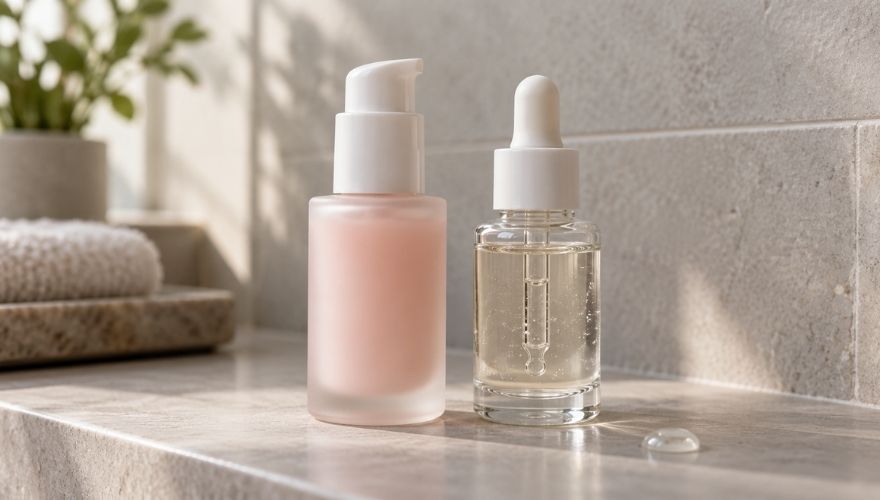
Two products on Medicube’s official American website illustrate how similar product names can conceal different formulations.
The PDRN Pink Peptide Serum was listed at $24. Its highlighted ingredients include salmon-derived PDRN alongside peptides and niacinamide.
The Ultra Light PDRN Pink Peptide Serum was listed at $21 for the 30-milliliter option. Its formulation includes hyaluronic acid, which is commonly used to improve skin hydration.
The lighter serum costs $0.70 per milliliter at the listed price. The $3 difference between the products represents approximately 14.3% of the less expensive serum’s price. Those retail prices were checked in October 2026 and may change.
A moisturizer or serum containing hyaluronic acid can improve hydration through mechanisms already established in cosmetic science. Consequently, improved skin appearance after using a PDRN product cannot automatically be attributed to the DNA fragments.
A stronger test would compare the finished formula against an otherwise equivalent preparation without PDRN.
Three Questions Worth Asking About the Formula
Before purchasing, I would look for three specific details:
- Which PDRN preparation is used? Molecular characteristics can influence delivery.
- Is the concentration disclosed? An ingredient list alone provides limited information about the amount present.
- Was the finished product tested? Results for another preparation may have limited relevance.
A manufacturer’s clinical report can be useful, particularly when it identifies participant numbers and measured outcomes. Independent research provides additional confidence.
Injectable Treatments Require Separate Medical Evaluation
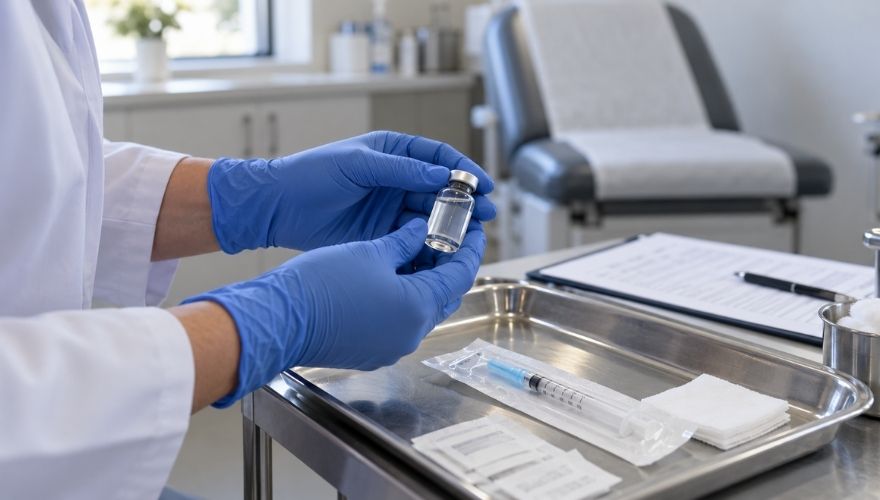
PDRN injections deliver material beneath the skin through a medical procedure. Potential complications include bruising and local inflammation. Infection is another recognized procedural risk.
The regulatory status of an injectable product depends on the specific preparation and country. The FDA’s cosmetic regulations distinguish cosmetic products from those regulated as drugs or medical devices.
Similar regulatory questions arise in other beauty categories, including formaldehyde in hair straighteners, where the FDA’s planned restrictions remain unresolved.
For American patients, the presence of PDRN in a cosmetic serum provides no evidence that an injectable treatment containing the ingredient has FDA approval.
Before considering an injectable procedure, ask a qualified clinician to identify the product and explain its regulatory status. Individual medical circumstances also influence the suitability of treatment.
Where the Evidence Leaves Consumers
The strongest clinical findings for PDRN come from particular medical applications, with wound repair providing some of the clearest results. Research on topical delivery is progressing, including evidence for a specific cream tested in 2026.
For someone mainly concerned about dry skin, a moisturizer containing well-established hydrating ingredients may be a more predictable purchase. Consumers interested in PDRN’s proposed effects on skin repair should examine clinical results for the exact preparation under consideration.
My main question before purchasing would be simple: has the manufacturer demonstrated that the finished serum produces the advertised effect in people?
A documented clinical result offers a stronger basis for that decision than an ingredient’s popularity. The difference matters most when a product borrows scientific claims established through a medical procedure with a different method of administration.